Why Study Biological and Environmental Sciences at Notre Dame?
The Department of Biological Sciences at Notre Dame is committed to understanding the fundamental mechanisms by which living systems operate. The Department is highly interdisciplinary and well-positioned to fulfill the promise of the new integrative approach to biology. Basic research is at the center of our endeavors, fueling and inspiring our teaching and training. We seek solutions to human health and environmental crises facing our society, such as:
- finding treatments, cures, and preventions for human diseases
- maintaining biodiversity on land and in our natural water sources
- ensuring an adequate supply of food and fresh water
- reversing the effects of pollution and climate change
United through the ultimate goals of fostering human and environmental health, we believe that real-world solutions require integrative biological inquiry and multidisciplinary collaboration. Our department serves as a hub connecting different academic units across campus and different universities worldwide, through life science-related investigation and problem-solving. Research in the department spans the wide realm of the life sciences, from molecules to ecosystems, and across disciplines as varied as infectious disease, cancer, organ regeneration, climate change, and biodiversity.
Our mission and priorities are to advance biological knowledge by demonstrable excellence in research, educate the next generation of leaders in the life sciences, and apply our findings to solve the grand challenges that will shape the future of human health and the environment.

Biological Sciences Major
Biological Sciences majors at Notre Dame explore life, human conditions, and nature. With a broad core curriculum and eight specialized tracks, the program is comprehensive yet flexible. Students receive personalized advising, career guidance, and close faculty relationships. They can also pursue a second major, minor, and study abroad opportunities.

Environmental Sciences Major
Environmental Sciences students study natural world interactions, combining physical and biological sciences. The multidisciplinary major covers basic ecological principles and allows focus on areas like aquatic ecology, geological sciences, entomology, and vertebrate zoology, offering a broad yet flexible education.

Neuroscience and Behavior Major
Students studying neuroscience will be prepared to pursue professional programs (medical, dental, veterinary, clinical psychology, or other health professions) and graduate programs in areas such as neuroscience, biological sciences or psychology.

Minor in Biological Sciences
The minor in biological sciences requires a total of 18 credit hours. In order to enter the biological sciences sequence, students must have completed BIOS 10171/11173 and BIOS 10172/11174.

Sustainability Minor
Through a multidisciplinary approach, the minor prepares students to serve as leaders in their communities - local, national, and international - by making constructive and substantive contributions to the development of more sustainable practices for the benefit of their own personal and professional lives, the lives of others, and the lives of future generations.

Science and Patient Advisory Minor
The Minor in Science and Patient Advocacy prioritizes understanding disease at the molecular, genetic, and clinical levels. Students study the natural history of disease and use that information to support researchers, clinicians, patients and families. The goal of this program is to provide undergraduate students with the scientific proficiency needed to be effective advocates for patients with rare disease.
-
91 % Notre Dame Undergraduates involved in research
-
84 % Notre Dame students are admitted to medical school (twice the national average)
-
2nd Notre Dame's national rank in study abroad participation
Latest Videos
More videos-
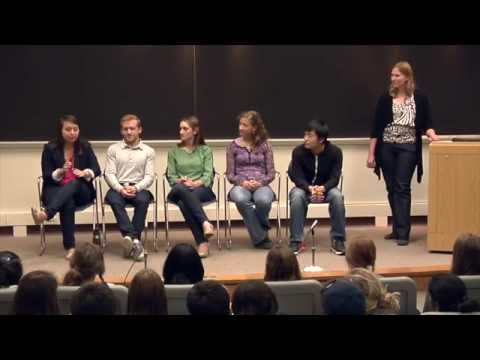
Undergraduate Research Opportunities in Biological Sciences
-

What It’s REALLY Like to Study Biology at Notre Dame | First-Year Experience Revealed
-

Fighting Mosquito-borne Diseases
Gallery


FAQs
Current Students
- What is the Environmental Science Major about?
The Environmental Science (ES) major has been designed for those students who have a keen interest in ecology and the interaction between humans and the natural world. Environmental Science majors take a wide variety of science and non-science courses. Further, those majoring in Environmental Science also have great latitude in their course choices. This freedom to specialize is one of the key features of the Environmental Science major.
- Can I use my science AP credits towards the biology or ES major?
Biology or ES majors may use AB or BC Calculus AP Credit towards the math requirement in the College of Science. Many biology and ES majors pursue graduate, medical, dental, or veterinary school after graduation, all of which prefer core science courses taken at the college level; for that reason, the Notre Dame College of Science, Biology or ES major does not typically accept science AP credits.
- I started off in a different major. If I switch to biology or ES, will I still be able to graduate on time?
The answer to this question depends on when you switched majors and what your previous major was, but most students who switch from another science major as late as first semester sophomore year have no problems graduating in four years. After the first four semesters, the core and elective curricula become flexible and allow a student to create a course load that fits his or her needs.
- What summer opportunities and funding sources are available to biology or ES majors?
A complete listing can be found under the “Undergraduate Research” tab to the left, but biology majors have the opportunity to continue their research full time in the summer with funding from the College or University. One great opportunity is the UNDERC program. Every year Biology and ES majors travel to one of two University of Notre Dame field sites and spend two months performing their own research programs.
- Can I study abroad as a biology or ES major?
Yes! Several programs can accommodate biology majors including the Puebla, Mexico; Dublin, Ireland; and London, England sites (and others with permission). Biology majors have the opportunity to take courses that count towards their major while experiencing the culture and education of a different country. It is recommended that biology majors study abroad during the fall of junior year if applying to medical or dental school, though some can study abroad in spring as well. Visit international.nd.edu for more information about Notre Dame study abroad!
- Does a Biology or ES degree prepare me for Medical or Dental school?
Yes, many Biology majors go on to pursue degrees in medicine, dentistry, physical therapy, and general medical school. The prerequisites for medical and dental school are built into the biology and College of Science curricula. Notre Dame Biology majors are well prepared for their graduate education and are accepted at high rates into medical and dental schools (90% and 100%, respectively). In fact medical schools are looking for students who come from broad backgrounds. More information for medical schools can be found here: healthsciencesadvising.nd.edu
- Can I have a second major or minor if I am majoring in biology?
Yes, and in fact, the majority of biology majors have a second major and/or minor. The biology major offers a flexible schedule in which students are encouraged to pursue their multidisciplinary interests.
Prospective Students
- What courses should I take in preparation for the MCAT and medical school?
The traditional Biology major course sequence (see sample curriculum) covers most of the recommended courses prior to taking the MCAT in the spring semester of junior year. Additional recommended courses for both the MCAT and medical school include Biochemistry, Psychology, Sociology and/or Anthropology, Biostatistics, and Ethics. Research the medical schools to which you are applying for any other requirements. More information for medical schools can be found here.
- What sets apart the biology and ES major at Notre Dame from that of other universities?
The Notre Dame Biology and ES Major provides a holistic, research-oriented approach to the biological sciences. It teaches the core tenants of all fields of biology while allowing students to choose electives that fit their interests. Hands-on learning and application of classroom knowledge in a research setting are valued in the Notre Dame biology major with the goal of improving human and environmental health. Finally, the Biology and ES program at Notre Dame has been extremely successful placing graduates in high level post-graduate programs around the nation.
- How soon can I get involved in research?
Our first recommendation would be to slow down! Take a semester or two to meet people, adjust to living away from home, and taking classes that might be challenging for you. When you are ready for research please visit our Undergraduate Research.
- What is the profile of a “typical” biology or ES major at Notre Dame?
The most accurate answer would be to say that there is no “typical” biology major. Some double major with Theology or Philosophy, others with Spanish or Economics. Some biology majors are pursuing graduate or medical school, while others hope to enter industry or teach. Most participate in research to some extent. That said, all biology majors are united by their curiosity, motivation, and passion for science. They form friendships in the lecture hall that extend outside the classroom.
For Parents
- I am concerned about my daughter/son’s workload. What academic and/or community-building resources are available?
Within the biology major, we have a vertical mentoring program called “Uplift” – an opportunity for students to interact with other biology majors in both an academic and non-academic setting. Uplift encourages healthy studying habits and provides underclassmen with advice from students who recently experienced a similar course load. Your daughter/son can contact her/his advisor or professor for details or how to join. Outside the major, the Office of First Year Advising as well as your daughter/son’s dorm can provide additional resources.
- What careers do science majors pursue?
In past years, biology and ES majors have gone on to pursue graduate school, medical school, dental school, jobs in industry, teaching, volunteerism, and other careers. The major provides not only a basis in the biological sciences but critical thinking skills that can be applied in many contexts and professions. In addition, Environmental Science majors graduate with the necessary skills to join government or non-governmental agencies such as the U.S. Fish and Wildlife Service or the World Wildlife Fund.