Notre Dame faculty fight malaria resurgence in Bangladesh
Between 2008 and 2020, districts across the country of Bangladesh saw a 93% reduction in malaria cases. Today, as the world reflects on the World…
Notre Dame faculty members Jarek Nabrzyski and Jennifer Tank selected as inaugural VPR Fellows
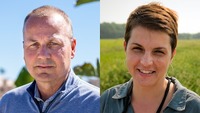
University of Notre Dame researchers Jarek Nabrzyski and Jennifer Tank have each been appointed to the newly created position of Vice President for Research (VPR) Fellow within Notre Dame Research.…
Jason Rohr named U.S. national champion for Frontiers Planet Prize for breakthrough sustainability research
Jason Rohr, Galla Professor and Chair of the Department of Biological Sciences at the University of Notre Dame, is the United States national champion for the Frontiers Planet Prize, which recognizes…
Unearthing Relationships: The many dimensions of an ecology field trip
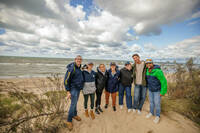
A caravan of several vans descended upon Michigan’s Warren Woods State Park on a crisp October morning. As I and about twenty students and teaching assistants in Dominic Chaloner’s Practical Ecology Lab…
Global Health graduate researcher Henry Kamugisha works to reduce malaria in the Ethiopian Highlands
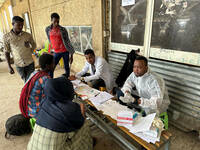
Although two hundred years have passed since the development of the first antimalaria treatment and over 140 years since…
Graduate students to present research, compete for prize money in annual Three Minute Thesis competition
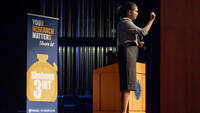
Nine University of Notre Dame graduate students will compete for $4,500 in prize money during the annual Shaheen Three Minute Thesis (3MT) competition. The competition will take place from 5 to 7 p.m. Wednesday (Feb. 28) inside Jordan Auditorium at the Mendoza College of Business on campus. It is open to the public.
From the St. Joseph River to the Great Lakes: Ashley Moerke’s freshwater ecology journey
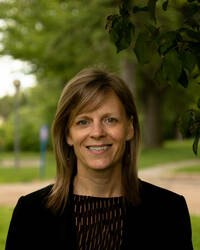
Ashley Moerke, MS ‘00 and Ph.D ‘04 at the University of Notre Dame, has worn many teaching, researching, and administrative hats throughout her professional career. However, it all began under the Golden Dome, where she pursued both a master’s and doctorate degrees while working in Gary…
Rev. Robert A. Dowd, C.S.C., elected 18th president of the University of Notre Dame
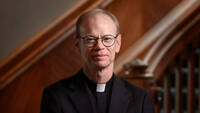
The Board of Trustees of the University of Notre Dame has elected Rev. Robert A. Dowd, C.S.C., as the University’s 18th president, effective July 1. He will succeed Rev. John…
ND-GAIN to launch Global Urban Climate Assessment, measuring climate resiliency at the city level
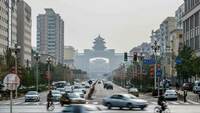
Building on its pioneering Country Index, which ranks climate vulnerability and readiness across more than 180 countries, the University of Notre Dame’s Global Adaptation Initiative (ND-GAIN) will soon begin tracking the progress of such efforts in cities around the world. Based on evolving climate vulnerability and adaptation research, the Global Urban Climate Assessment (GUCA) aims to develop a pilot decision-support tool to inform actions and investments in urban areas.
Success of Wolbachia-infected mosquitoes in fighting dengue may be underestimated
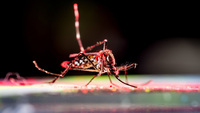
Researchers at the University of Notre Dame have conducted an analysis of the World Mosquito Program’s randomized control trial of Wolbachia-infected mosquitoes in Indonesia, looking at how excluding transmission dynamics impacted the original interpretation of the trial’s results.
Fighting Irish, Fighting Cancer: How professor Jianneng Li’s research expands prostate cancer advancements
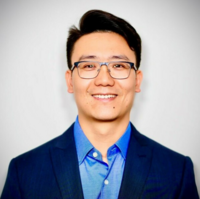
What happens when previously treatable cancers become drug-resistant? Jianneng Li, Archibald Assistant Professor in the Department of Biological Sciences, is trying to answer that question by conducting critical research on prostate cancer. Li has focused on prostate cancer as the topic of…
New technology could lead to quick, minimally invasive cancer diagnoses
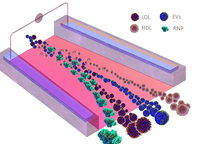
Researchers have developed a new, lightning-fast method to detect “extracellular RNA,” or exRNA, which will aid in early detection of diseases including cancer, heart disease, HIV and other life-threatening conditions.
Researchers uncover a new target in the fight against metastatic breast cancer
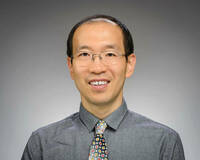
In the fight against metastatic cancer, harnessing a patient’s own immune system to target cancer cells has been a promising strategy. In a recent article published in Cell Metabolism, Xin…
Notre Dame researchers’ data-driven approach to protecting wildlife receives $1.5 million from the NSF
The National Science Foundation (NSF) has awarded $1.5 million to a multidisciplinary team of faculty researchers at the University of Notre Dame who are working to protect wildlife from impending threats caused by climate change. The project, “Exploiting Federal Data and Beyond: A Multi-modal Knowledge…
Schnell joins inaugural statewide rare disease advisory council
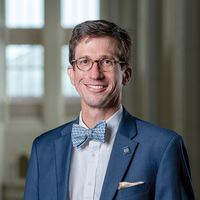
Santiago Schnell, William K. Warren Foundation Dean of the College of Science at the University of Notre Dame, has been appointed to a new statewide advisory council to explore new directions for assisting patients with…
Biology postdoc wins annual Lightning Talk Competition title
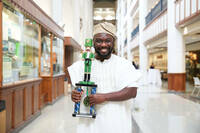
Tolulope “Kay” Kayode holds the Lightning Talk trophy Postdoctoral researcher Tolulope “Kay” Kayode won…
A picture of drought: ND ecologist matching NASA images with field data to measure forest health
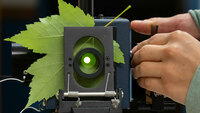
Nate Swenson strides so quickly through the Wisconsin forest while carrying a large pole clipper that postdoctoral researcher Vanessa Rubio usually follows the 40 feet of rope dragging behind him. When they reach the designated plot, Swenson extends the clipper about 30 feet high and pulls…
Holly Goodson elected as fellow of The American Society for Cell Biology
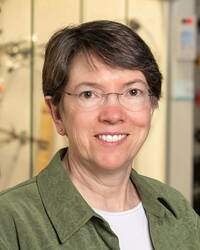
Goodson joins 18 other distinguished scientists from across the globe in the 2023 cohort of fellows.