College of Science

Empowering Future Innovators

We seek to understand the fundamental mechanisms by which living systems operate and employ a wide range of cutting-edge and innovative approaches and systems.
Our mission is to be a global force for good by advancing fundamental biological knowledge via excellence in multidisciplinary research and education to understand biological systems and improve environmental and human health.

Reese Calalang, a junior majoring in Environmental Science, conducted undergraduate research this summer at the University of Notre Dame Environmental Research Center (UNDERC).
Her research focused on investigating the abundance of microplastics in sediments collected from UNDERC lakes, contributing to a better understanding of microplastic pollution in freshwater ecosystems.
The project was supported by the UNDERC Track 2 program under the mentorship of Drs. Claire Rubbelke and Melissa Berke.
Reese’s work highlights the importance of undergraduate research in addressing emerging environmental challenges and advancing our understanding of freshwater ecosystems.

The American Association for the Advancement of Science (AAAS) has named its newest class of Fellows, including five faculty from the University of Notre Dame, recognized for excellence in fields such as biology, chemistry, and engineering.
“Election as a AAAS Fellow is a significant honor and testament to disciplinary excellence,” said John T. McGreevy, Notre Dame Provost. “We celebrate these colleagues whose work enhances Notre Dame’s standing as a global research university and a force for good.”
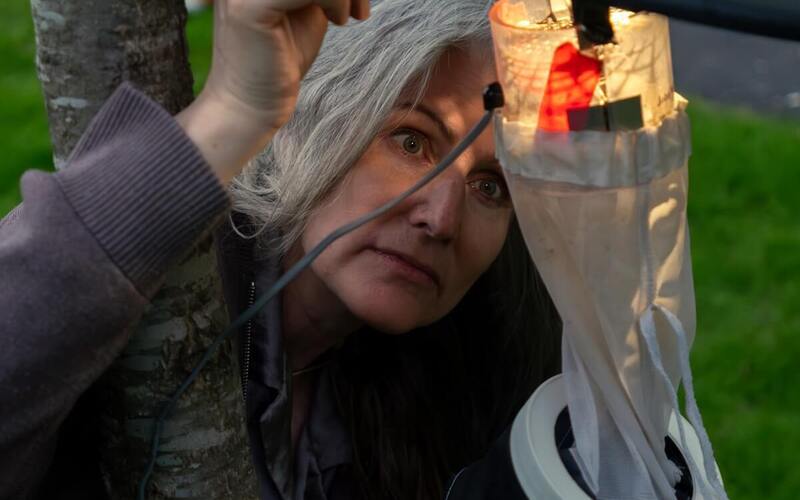
A striking image from Notre Dame Biology faculty member Lee Haines and chemistry Ph.D. student Shayanta Chowdhury has been named one of the winning entries in Nature’s 2026 photo competition. Captured under ultraviolet light, the image reveals a glowing yellow fever mosquito, part of Haines’s research exploring new ways to kill blood-feeding insects. Stop and take a look at the science, color and beauty behind the winning shot.

Watershed Modeling and Community-Centered Optimization for Resilient and Sustainable Rural-Urban Water Systems brings together scientists, engineers, and local leaders to create a shared plan for managing water more sustainably across the St. Joseph River Basin, which flows from farms and small towns to cities like South Bend before reaching Lake Michigan.
The project is led by Principal Investigators Jennifer Tank, the Ludmilla F., Stephen J., and Robert T. Galla Professor of Biological Sciences and director of the Notre Dame Environmental Change Initiative, and Alexander Dowling, the Tony and Sarah Earley Collegiate Professor of Energy and the Environment in the Department of Chemical and Biomolecular Engineering.


Associated Press
June 04, 2026
Livestock are vulnerable because of how they’re handled, Lee Haines, an associate research professor of biological sciences at the University of Notre Dame, said in an email Thursday. Standard practices with cattle can break the skin, including shearing and de-horning, or even moving them in and out of corrals can cause scrapes and cuts. Birth would also make a mother and calf vulnerable, she said.

Biological Sciences

Inside Indiana Business
April 09, 2026
The University of Notre Dame’s College of Arts & Letters is launching the Human Neuroimaging Center, a new research hub led by psychologist Aron Barbey aimed at studying how brain networks shape human intelligence, health and behavior.

The Department of Biological Sciences engages with the greater Michiana community to provide science engagement, expertise, and service. These activities range from developed partnerships, ongoing opportunities for K-12 students and teachers, and individual initiatives to meet community needs. Outreach in the Department of Biological Sciences is a priority at all levels, from undergraduate students to faculty and staff. The programs presented here represent a snapshot of the outreach by the Department of Biological Sciences. We encourage you to reach out to learn more or propose new programs.



Our department is characterized by unsurpassed commitment to the development of our graduate students into well-rounded scientists who can take on leadership roles in industry, academia, and national labs. With strengths in all areas of biological and environmental sciences and abundant opportunities for interdisciplinary research, we invite you to learn more about the graduate experience at Notre Dame.
Learn about the graduate student experience